uk glp-1
the uk glp-1 semantic landscape: 340,000 monthly searches, structured into nine clusters of demand.
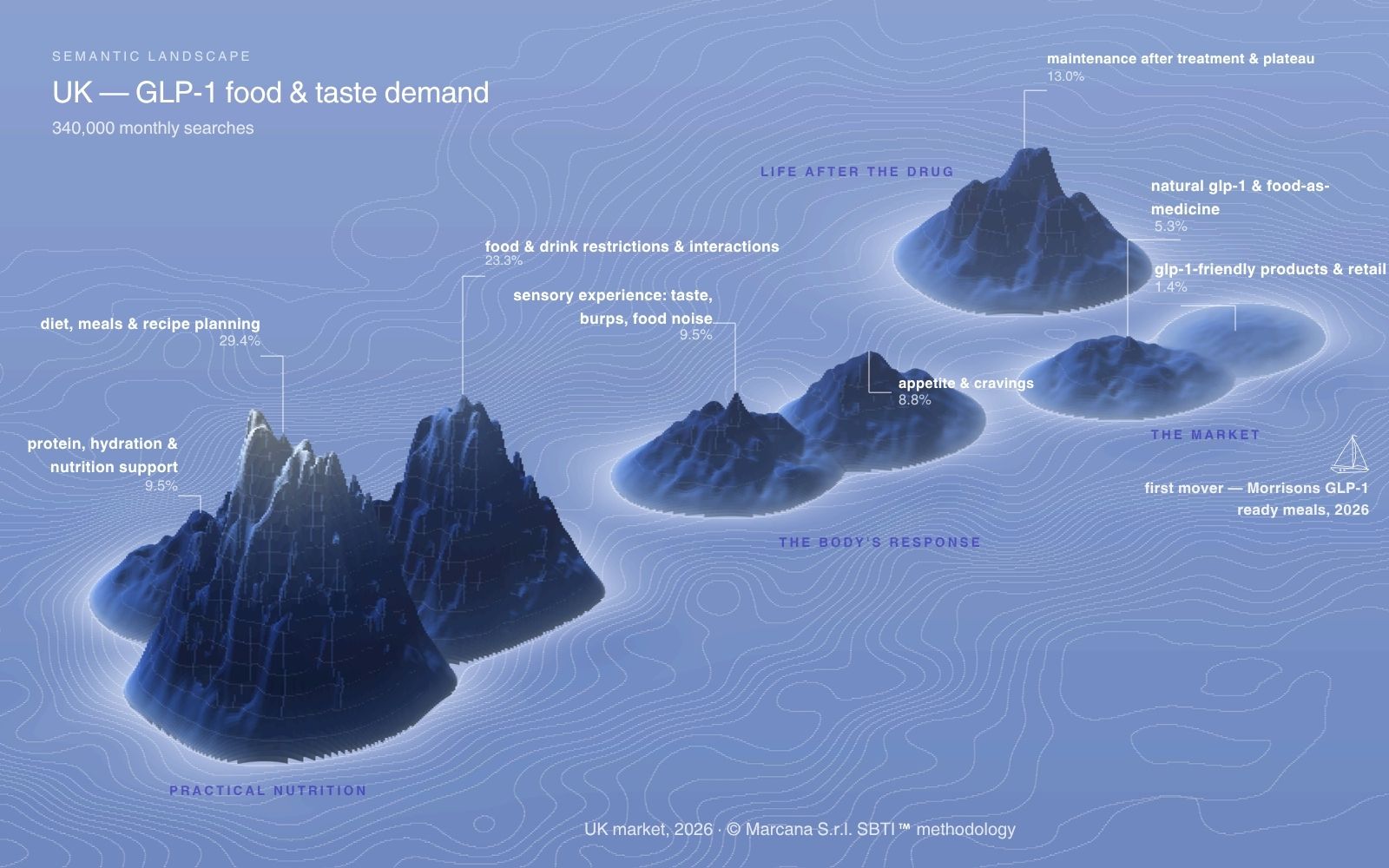
practical nutrition — 62.2%
diet, meals & recipe planning — 29.4%. food & drink restrictions & interactions — 23.3%. protein, hydration & nutrition support — 9.5%. the largest territory: people on glp-1 asking, every day, what to actually eat.
the body's response — 18.3%
sensory experience: taste, burps, food noise — 9.5%. appetite & cravings — 8.8%. the drug changes how food feels: taste shifts, aversions, the quieting of food noise.
life after the drug — 18.3%
maintenance after treatment & plateau — 13.0%. natural glp-1 & food-as-medicine — 5.3%. the question no one is answering at scale: what happens when the prescription ends.
the market — 1.4%
glp-1-friendly products & retail — 1.4%. demand is a mountain range; supply is a sailboat. first mover: morrisons glp-1 ready meals, 2026.
How to read it: elevation = search volume. Distance = semantic distance. A tall peak with no vessel is demand no one is serving.
the map above is drawn from real search behaviour: 340,000 monthly searches in the uk, clustered by meaning. the first thing it tells you is a word — in britain, this market speaks mounjaro. people don't search for a category; they search "what to eat on mounjaro", "mounjaro diet plan", "mounjaro meal ideas". any product, retailer or service that wants to be found has to speak that language.
the second thing is a hierarchy of need. practical nutrition towers over everything: 89,000 monthly searches for diet plans and eating rules alone, plus 79,000 on what is allowed and what is not — and nearly half of those are one very british question: alcohol. "can you drink alcohol on mounjaro" is asked, in its variants, 38,000 times a month. no mainstream uk brand is answering it.
what the uk actually asks
read the raw queries and the market stops being abstract. "mounjaro diet plan pdf" — 5,400 searches a month: people want something printable, a rulebook. "what i eat in a day on mounjaro" — the social-video format turned into a search. "sulphur burps mounjaro" — 4,400 a month, a sensory problem stated in plain words. "what happens when you stop taking mounjaro", "how to come off mounjaro without gaining weight" — 44,000 monthly searches about life after the drug, the territory with the tallest peaks and, as of today, almost no products underneath: glp-1-friendly retail language totals 1,760 searches, most of them about a single first mover — morrisons glp-1 ready meals.
the sensory read
this is where the landscape becomes a formulation brief. the loudest sensory barrier is sulphurous: metallic taste and sulphur burps generate 28,000 monthly searches — flavour science has answers (masking, acid balance, aroma design) that no glp-1-adjacent product in the uk currently claims. taste itself shifts on the drug: "does mounjaro change your taste buds" is a genuine, recurring question — an invitation to design for an altered palate, not the average one. appetite falls but protein needs don't: the demand for protein guidance, hydration and electrolytes points to small-format, high-density, gently flavoured products — nutrition that respects a quieted appetite. and "food noise", the phrase users adopted for the mental chatter that glp-1 silences, is the kind of consumer-born language a brand can build on.